The King Takes WWF to Court
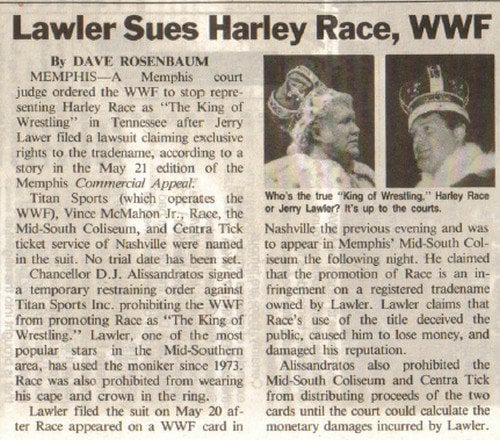
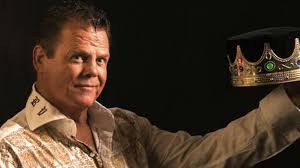
In Memphis, Jerry Lawler was the king. Later, when he went to the WWF and was cast as a loud-mouth jerk heel, the people of Memphis still looked at Lawler as their hero. While he was a heel everywhere else, when The King ventured back to Memphis for the USWA, he was the “king of wrestling” in their book. It was ingrained in their psyche, and part of the reason may be because of how protective Jerry Lawler was of his chosen moniker.
As we all know, the WWF was everywhere in the 1980s. The territorial boundaries that once resisted incursions was being broken down by the WWF juggernaut. Occasionally, someone would open an ‘outlaw’ promotion, but more often than not, it wouldn’t last long. In the WWF though, it was a different story, and promoters had little defense against these invasions.
Of course, what the WWF was doing was not illegal. You see multiple gas stations along a stretch of road, selling their own brand; same with fast food restaurants and supermarkets. It’s competition. While the wrestling business had always been run on territorial lines, watched over by the self-governing body of professional wrestling in North America – the National Wrestling Alliance – there was nothing that could be done if a promoter was brazen and powerful enough to challenge the system.
But one man chose to stand up and defend himself and his livelihood – Jerry “The King” Lawler.
In 1974, Jerry Lawler first started calling himself “The King.” Lawler was a big fan of Elvis Presley, the king of rock n roll, and being in Memphis, the name made sense. But the origins of the name came from wrestler Bobby Shane, who called himself the king of wrestling, and had a cape and crown that he gave to Lawler before departing for Australia. Sadly, Shane died in a plane crash on February 20, 1975, and so Lawler could not return the items.
He did the next best thing, parleying it into a hall of fame career. Giving yourself the title of “king” means you have to back it up tenfold in the ring, and Lawler managed to do it and then some. He earned the admiration and respect of the passionate Memphis wrestling fans, and became undoubtedly in their mind the king of professional wrestling.
Over in the WWF, in 1985 they held the first of what would be an annual King of the Ring tournament. The following year, on July 14 in Foxborough, Massachusetts, Harley Race outlasted the competition and defeated Pedro Morales in the final. Race – the multiple time former NWA World champion – took to calling himself “The King,” and wore a purple crown and robe to the ring. After defeating another hapless foe, Race ordered his beaten opponent to kneel and kiss his now-royal feet. His manager Bobby Heenan would even grab their hair and force them to commit the degrading deed.
When the WWF decided to make their rounds to the state of Tennessee, they cheekily proclaimed on their advertising that “the king of wrestling” would be appearing. As well as being a wrestler, Lawler also co-ran the established Continental Wrestling Association with Jerry Jarrett. For Lawler, this was a double blow. Not only was Vince McMahon coming into HIS territory, and endangering his livelihood in that respect, he also had the nerve to try and trick the great wrestling fans in Memphis into thinking that the one and only Jerry Lawler would be on these shows. After all, when they proclaimed that “The King” would be on the card, who else could they possibly be talking about?
A lone man, Lawler still went ahead in suing the World Wrestling Federation for trademark infringement, and the courts agreed. While the WWF could continue calling Harley Race “the king of wrestling,” they could not make that claim in the state of Tennessee. In doing this, Lawler actually earned the respect of Vince McMahon himself.
Years later, when Vince hired Lawler in late-1992, McMahon saw Lawler as a man on principle who would go to great lengths to protect himself and his business. Not only did he wrestle and do colour commentary for the WWF, he was also able to go to Memphis for the USWA, which had been born after the merging of WCCW and CWA, and run by Jerry Jarrett. This also resulted in WWF stars appearing for the USWA. Just like Lawler was a hero in Memphis and a heel everywhere else in the WWF, top fan favourite Bret Hart was a bad guy when he led a ‘WWF invasion’ (a storyline this time) along with brother Owen and even McMahon himself.
What may have been seen by some as career suicide actually panned out well for Lawler. Not only did it earn the respect of Vince McMahon, he was hired several years later, and the USWA benefited from having an association with access to WWF superstars. Even when Lawler got himself in legal hot water himself in late-1993, McMahon stood by him. He went on to have a truly Hall of Fame career, particularly as the long-time colour commentator with Jim Ross on Monday Night RAW.
Sometimes, it pays to be a King.