WCW & SMW – A Wasted Opportunity
If Bill Watts had remained in World Championship Wrestling, Smoky Mountain Wrestling would have been for WCW what ECW would be for the World Wrestling Federation.
After Jim Cornette and Stan Lane quit WCW in late-1991, they formed a new promotion called Smoky Mountain Wrestling. With the backing of famed music producer Rick Rubin, SMW was based out of Knoxville, Tennessee, and began running live events in October 1991.
The biggest rivalry in SMW was a tag team war pitting the Jim Cornette managed Heavenly Bodies (Stan Lane & Dr. Tom Prichard) against The Rock N Roll Express (Ricky Morton & Robert Gibson). This was essentially a continuation of the memorable Midnight Express/Rock N Roll Express feud, except that Bobby Eaton wasn’t involved (at least at first).
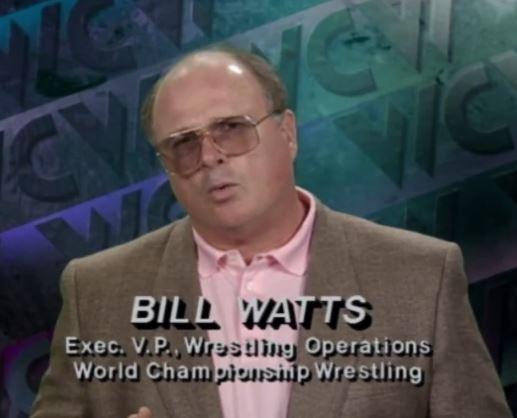
Prior to becoming Executive Vice President of WCW in 1992, “Cowboy” Bill Watts had a solid career as a wrestler, but is best known for being a promoter. Watts took over the Mid-South territory in Louisiana, and it became a hotbed for its realistic, hard-hitting matches, coupled with intelligent booking that didn’t insult the intelligence of the viewer.
In an attempt to compete with the expanding WWF, Mid-South Wrestling became the Universal Wrestling Federation. However, in 1987, Watts was forced to sell out to Jim Crockett Promotions, which in turn was purchased by Ted Turner and made into World Championship Wrestling.
Watts had been out of the business for several years when he was hired by WCW as Executive Vice President. He still kept in contact with Jim Cornette, who along with The Midnight Express (Dennis Condrey and Bobby Eaton) had a good run in Mid-South. SMW was up and running and Cornette lamented to Watts the amount of money WCW was spending on the infamous “mini-movies” to promote their pay-per-views.
Instead, Cornette said he could provide Watts with the talent and the storyline to use at a fraction of the cost, plus it would draw money. Watts agreed, but already, the writing was on the wall. The wily outlaw sensed that his days were numbered in WCW. While arguably Watts was presenting a better in-ring product, he was still the rambunctious old cowboy as he had always been, and this ruffled some feathers. So, in case he had to split – or was removed – the arrangement was put in writing so Cornette and SMW would get everything that was owing to them.
The seeds to plant the return of the notorious Jim Cornette to WCW took place a week prior, when footage was shown on television of The Rock N Roll Express. They were originally scheduled to face The Wrecking Crew at Superbrawl III, and so this was to hype their own return, as they had been plying their trade in SMW. When it showed them beating up The Heavenly Bodies from Smoky Mountain, Cornette was enraged and turned up a week later on WCW television.
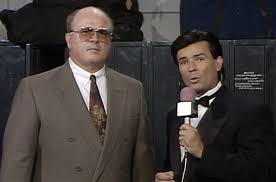
Accompanied by Lane, Prichard as well as Bobby Eaton, Cornette lashed into WCW over the footage. In a classic shoot style promo, he raged in front of Bill Watts and told the abridged version of his and the Midnight Express’ history in WCW, which had ended poorly during the Jim Herd era. Cornette mentioned Herd, saying he hated him, and didn’t think much better of Watts either. He wanted an apology or he would sue TBS, WCW and even Ted Turner.
Finally, Watts had enough when Cornette began poking him in his ample chest. Watts said he wasn’t apoligising, and when Cornette called the Rock N Roll Express murderous on the television ratings, Gibson and Morton arrived on the scene. “The Cowboy” said the ring was neutral ground if they wanted to have a match, and with all four in their street clothes, the two teams had at it until Eaton interfered and caused a disqualification.
Bobby Eaton was freed up to work some SMW shows, along with another WCW-contracted wrestler, Arn Anderson. As a third Heavenly Body, Eaton became the Beat the Champ Television champion, before being sent packing back to WCW by SMW Commissioner, “Bullet” Bob Armstrong.
With all due respect to the Wrecking Crew, it’s safe to say that The Rock N Rolls and the Heavenly Bodies made for a much better match for Superbrawl III. It was well received, with chants of “rock and roll” throughout. Eaton had been sent to the locker room before the bell but came out later and tried to interfere again, but Morton and Gibson still came away with the win.
Smoky Mountain being a Southern promotion, utilising talent that had been in WCW and were well known to those fans seemed like a match made in heaven. But, just as Watts predicted, he was gone even before the pay-per-view began. The story of what happened can be written for another time, but needless to say, his replacement had no intention of doing further business with SMW.
It’s highly unlikely that the new Executive Vice President Eric Bischoff would not have continued the working agreement, but especially after Cornette confronted him at the pay-per-view. An irate Cornette had discovered it was Bischoff who had edited his original return promo on television, taking out the anti-WCW comments, and where he said he hated Jim Herd, and so the two did have words at Superbrawl III.
Cornette has no doubts that had Watts stayed, there would have been a further working relationship with WCW. They would have likely not turned to the WWF, which saw Shawn Michaels and The Undertaker appear on an SMW supershow. Cornette would likely have not become the ‘American Spokesperson’ for WWF champion Yokozuna (although its highly probable he would have eventually signed with the WWF, just not as soon).
Due to Bischoff wanting to move away from Southern wrassling, he did not take advantage of WCW working with a promotion like Smoky Mountain, which could have directed talent to WCW instead of the WWF, as they ended up doing. Ironically, it was Vince McMahon – destroyer of the territories – who chose to work with companies like SMW, as well as ECW and the USWA to help discover and develop talent. A longer term working agreement between WCW and SMW would have been something to see, but sadly we will never know what – if any – plans existed beyond the one pay-per-view appearance.